The story of the advocacy for the European Pharmacopoeia
- News
- 9 December 2022
Since September 2019 Albania has been among the countries that have acceded to the European Pharmacopoeia convention, a Council of Europe mechanism that sets the quality and control standards for the pharmaceutical sector. Ratification by Parliament put an end to 24 years of institutional neglect, which had left Albania as the only country in the European area outside the convention. Few people can be happier about this decision today than Admir Malaj, a pharmacist and alumnus of the School of Political Studies, who four years earlier had launched a genuine advocacy campaign on this issue.
His tireless insistence at every meeting with foreign diplomats, the engagement of pharmacy students and the media attention given to the issue can now be said to have paid off. This is undoubtedly one of the success stories of the contribution that the School’s alumni make to policy-making and to driving important integration reforms in the country.
Networking at the Council of Europe
As a professional and researcher in the pharmaceutical regulatory field, Admir Malaj joined the School of Political Studies with the class of 2015. Thanks to the School’s programme, he had the opportunity to visit the Council of Europe and the Albanian diplomatic mission in Strasbourg, where the seat of the Pharmacopoeia is also located. At a reception hosted by Ambassador Ardiana Hobdari, Admir was able to discuss pharmaceutical safety and the European Pharmacopoeia. Our country held observer status in this body, but had no regular representation in its activities. The Ambassador expressed the mission’s continuing interest in membership of the Pharmacopoeia, as well as the invitations it had sent to the responsible institutions to become more involved.
Following this meeting, Admir put the Ambassador in contact with the director of the National Medicines Agency. As a result of this networking, a delegation from Albania was invited to the next session of the Pharmacopoeia, a representation that Albanian institutions had lacked for many years. During 2016 and afterwards, Albanian delegates attended Pharmacopoeia meetings more often but, unfortunately, this contact did not lead to a positive outcome. With changes in the executive that also affected the institutions responsible for health policy, and with the end of Ms Hobdari’s mission in Strasbourg, it seemed that silence would once again settle over the initiative. “At that point I understood that raising awareness and putting the actors in touch were not enough to achieve such a step. What was needed was a more structured advocacy effort aimed at public institutions,” Admir recalls.
Advocacy in policy-making
As an alumnus of the School, Admir was selected in 2016 to take part in a training programme on advocacy and public initiatives, supported by the Open Society Foundation for Albania (OSFA). Among other things, he learned from the School’s staff and the trainer Ms Sashenka Lleshaj how best to move a legislative initiative forward, since membership of the European Pharmacopoeia required Parliament to adopt a special law ratifying the convention. “The knowledge I gained in this training helped me build an advocacy strategy aimed at policy-makers. Involving different actors in the process was the key to achieving results,” Admir notes.
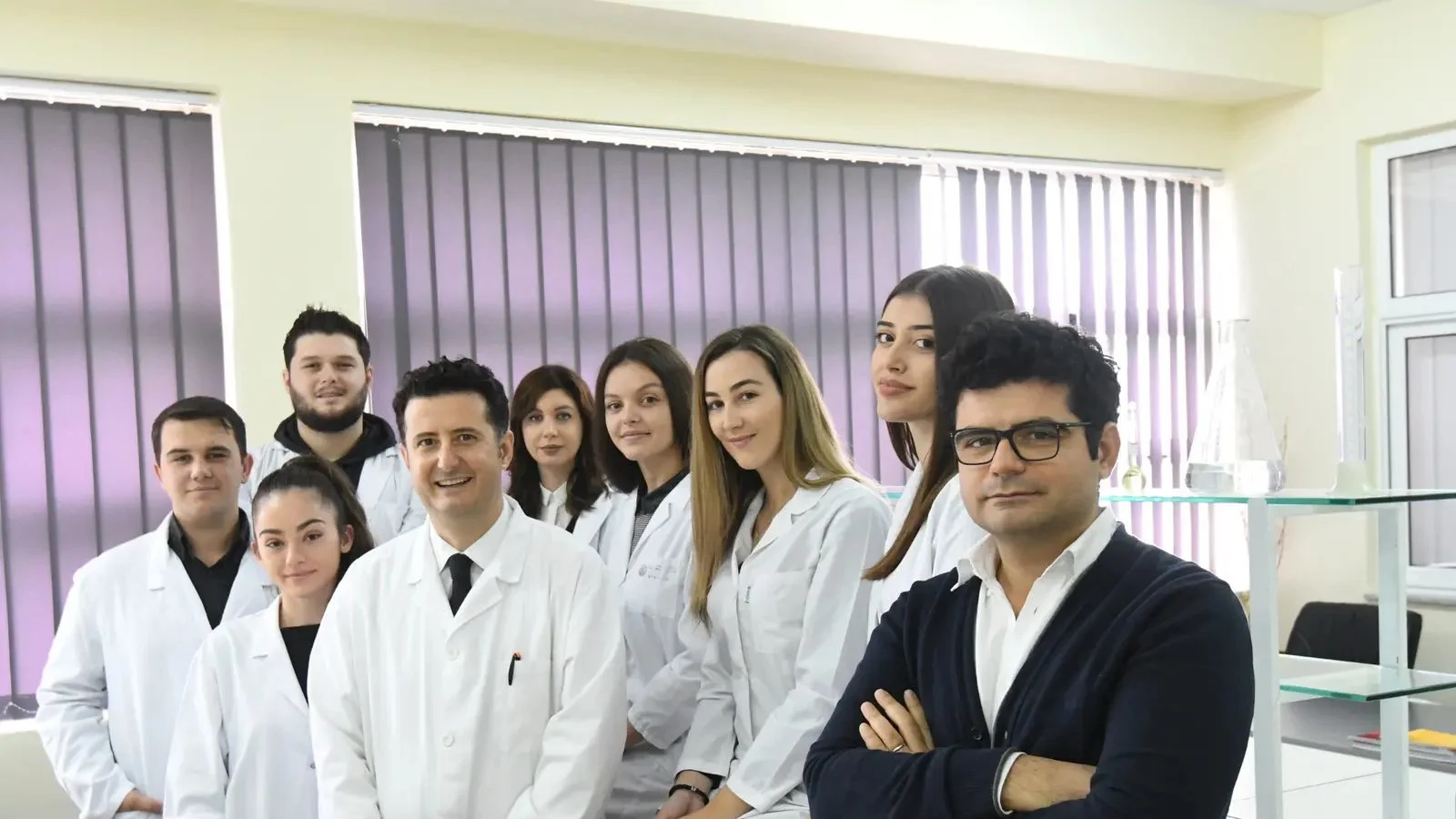
This time he began his intervention in the academic world. Admir held awareness-raising meetings with fellow researchers and lecturers in the pharmaceutical fields and with students of the Department of Pharmacy. At the end of 2017, together with the students, he launched a social media awareness campaign with the hashtag #DuamFarmakopeSiGjithëEvropa, along with several accompanying notes that helped inform a number of online and broadcast media. This made the Pharmacopoeia known to the general public for the first time. In April 2018 Admir drew the attention of diplomats from the European Union Delegation with his remarks at the civil society hearings that followed the publication of the European Commission’s annual report. He once again highlighted the report’s finding of a “lack of alignment with the acquis in the legislation on medicines”, as a reminder that Albania was still not part of the Pharmacopoeia.
The advocacy intensified further in May 2018, when a group of students from the Department of Pharmacy at the University of Tirana joined the campaign. The young people sent an official request for information to the responsible institutions on the progress of the convention’s ratification. Thanks to years of tireless insistence, Admir was no longer alone on this journey. The People’s Advocate’s reply to the students’ letter confirmed for the first time that the Ministry of Health had initiated the process of ratifying the convention, in cooperation with the Ministry of Foreign Affairs. After 24 years of neglect, membership of the Pharmacopoeia was finally becoming a reality.
The Ministry of Health successfully completed the legal process and, thanks to it, in September 2019 Albania became the 39th country to accede to the Convention on the Elaboration of a European Pharmacopoeia. This membership creates the conditions for quality and safety standards for medicines, bringing us ever closer to the European common market. It also creates more opportunities for professional growth for Albanian pharmacists and for the country’s entire pharmaceutical sector.
“Looking back today, I feel great satisfaction that, together with colleagues and pharmacy students, we were able to put the ratification of the Convention on the Elaboration of a European Pharmacopoeia on the policy-makers’ agenda and keep it firmly there,” says Admir, at the successful conclusion of an advocacy effort that lasted more than four years. Admir does not want to keep all the credit for this initiative for himself: “I would not have succeeded without the support of the many actors who took part in this long adventure. The School of Political Studies supported the initiative through its education on advocacy and public initiatives, and through networking with other actors who could take the process even further. Special credit goes to the Ministry of Health, which initiated and completed the ratification of the convention. This, I believe, is the right synergy between policy-making, civil society and academia that the country needs in order to achieve in one generation what might otherwise take two or three.”